Skip to content

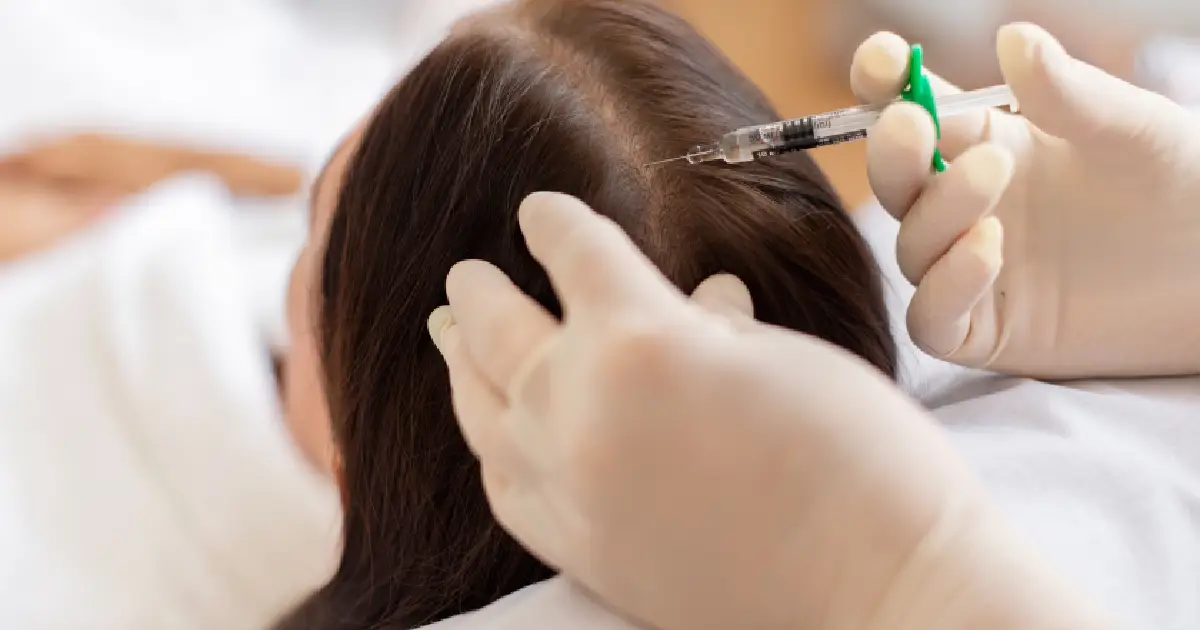
Table of Contents
Noticing more hair in the shower drain, or a part line that keeps looking a little wider in photos, can be unsettling in a way that is hard to explain to people who haven’t been through it. If you have started looking into PRF for hair loss, you are probably trying to figure out if PRF hair treatment at Vita Aesthetics actually fits what is happening on your scalp.
Who is not a good candidate for PRF hair treatment?
PRF isn’t the right fit for areas that have been bald for years because the treatment works with active follicles. It is also not recommended for scarring alopecia, an active scalp infection, or an untreated inflammatory scalp condition. Blood or platelet disorders, along with certain medications, need a provider’s review first.
What PRF Hair Treatment Actually Does for Thinning Hair
PRF, or platelet-rich fibrin, uses a small sample of your own blood to support the follicles you still have. The sample is spun down to concentrate platelets, fibrin, & growth factors, then injected into targeted areas of the scalp. No anticoagulants or synthetic additives are involved, which is part of why many patients feel comfortable with this approach.
Once placed, those growth factors may help support circulation around the follicle and encourage healthier growth cycles. The fibrin matrix is the practical difference between PRF and traditional PRP, because it releases growth factors more gradually rather than all at once.
One honest note before you read further: Using platelet concentrates for hair is an off-label application, & the research is still developing. Early studies are encouraging, but this is a supportive PRF scalp treatment, not a cure for hair loss, and any provider worth trusting will tell you the same.
The Hair Loss Concerns PRF Is Best Suited For
PRF tends to help most when follicles are weakening but still active. That usually looks like mild to moderate thinning, a part line that has slowly widened, or reduced density across the crown that you notice more in certain lighting.
It is also commonly used for increased shedding tied to stress, hormonal shifts, aging, or general scalp imbalance. If your hair has always been reasonably full and something changed in the last year or two, you are often in the range where PRF for hair thinning makes the most sense.
The clinical principle behind all of this hair regrowth treatment is simple. PRF works with follicles that are still alive. It can support a struggling follicle, but it cannot bring back one that is no longer there. That single idea explains most of what follows.
Who Makes a Good Candidate for PRF
Good candidates for PRF hair regrowth are generally adults in good overall health with early-to-moderate thinning. Beyond that, a few things matter:
- You want a nonsurgical option and are comfortable with gradual change. PRF works quietly over months rather than delivering a dramatic before-and-after. Patients who appreciate subtle, natural-looking improvement tend to be the most satisfied with where they end up.
- You are willing to commit to a series of sessions. One appointment rarely does the work. Hair follicles respond to repeated stimulation over time, so most treatment plans involve several sessions spaced weeks apart, with maintenance discussed from there.
- You are noticing thinning now, not looking back on years of loss. Timing matters more than almost anything else. A part line that has widened recently or shedding that started within the last year or two gives PRF far more to work with than an area that has been thin for a decade.
- You are in good general health. Your provider will review medications, supplements, and health history to confirm this treatment is appropriate for you.
Realistic expectations matter more than almost anything else on that list. Hair grows slowly, so results build over months, and most patients see reduced shedding before they see visible density—patients who understand that going in tend to be the happiest with where they land.
Is PRF Safe? What the Treatment Involves
Because PRF comes from your own blood, the risk of allergic reaction or rejection is very low. That is one of the main reasons patients gravitate toward it over synthetic options.
The appointment itself is usually calmer than people expect. A small blood sample is drawn, processed to separate the platelet-rich fibrin, and then injected into targeted areas of your scalp. Most patients tolerate it well, though the scalp is a sensitive area and some tenderness during treatment is normal.
Afterward, mild redness, swelling, or scalp sensitivity may occur and generally settles within a few days. Aftercare is light. Skip washing your scalp for 24 hours, avoid strenuous exercise briefly, and avoid hats or heavy hair products right after your appointment. Most people return to their regular day with minimal interruption.
How a Provider Decides Whether PRF Fits You
At Vita Aesthetics, we determine candidacy in a consultation, not from a photo or a quick description. Every appointment starts with an evaluation of your scalp condition, hair density, and thinning pattern, because the pattern often reveals what’s driving the loss.
Your provider will also review your health history, current medications, supplements, and any hair treatments you have already tried. From there, the conversation turns to what PRF can reasonably support in your situation and what might call for a different approach altogether.
PRF is also frequently planned alongside other therapies rather than as a standalone answer. Topical treatments, nutritional support, and other regenerative options can work together, and a combined plan often serves patients better than any single treatment.
Get a Personalized Approach to PRF Hair Restoration
If thinning has been weighing on you, a conversation is a gentle place to start. Our PRF for Hair Loss Service in Sarasota, FL, at Vita Aesthetics begins with an honest assessment of your scalp and whether this treatment genuinely fits your concerns. Book your hair restoration consultation today.